
 English
news
Is there formaldehyde in the soundproof board of the conference room?
The answer is affirmative. The formaldehyde in indoor soundproof panels mainly comes from two sources:
Material defects of synthetic boards: Some soundproofing boards use artificial boards (such as density boards and multi-layer boards) to increase thickness or reduce costs. These boards may be bonded with urea formaldehyde resin adhesive with high formaldehyde content. The higher the density of the board, the greater the amount of adhesive used, and the corresponding risk of formaldehyde release increases.
Formaldehyde residue in adhesives: The adhesive used in the synthesis process of soundproof boards is the main carrier of formaldehyde. Formaldehyde in inferior adhesives will slowly release over long-term use, especially in high temperature and high humidity environments, where the release rate will accelerate.
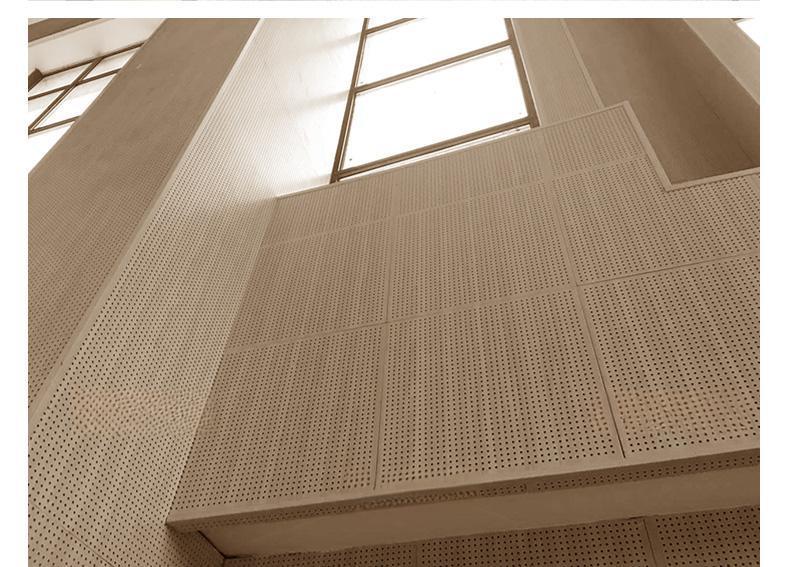
How to deal with excessive formaldehyde in soundproof boards?
1. Control from the source: choose legitimate brands and environmentally friendly products
Priority should be given to brands with professional qualifications, such as Yipai Sound Insulation, which has been deeply involved in the field of sound insulation materials for many years. As a benchmark enterprise in the industry that focuses on environmentally friendly acoustic materials, Yipai Sound Insulation always regards formaldehyde control as the core product standard:
Material Innovation: Adopting E0 grade environmentally friendly substrates (such as formaldehyde free glass magnesium board and aviation grade damping materials) to reduce formaldehyde emissions from the source;
Process upgrade: Abandoning traditional urea formaldehyde resin adhesive, using food grade environmentally friendly hot melt adhesive or water-based adhesive. After testing by the National Building Materials Testing Center, the formaldehyde emission of the soundproof board is as low as 0.02mg/m ³, far below the national standard (GB 18580-2017 "Formaldehyde Emission Limit for Indoor Decoration Materials, Artificial Boards and Their Products") of 0.124mg/m ³;
Full process control: From raw material procurement to finished product delivery, each batch of products is tested by CNAS certified laboratories and comes with formaldehyde emission testing reports to ensure that consumers can trace the environmental performance of the products.
2. Professional handling before and after installation
Pre treatment before installation: If conditions permit, the soundproof board can be placed in a ventilated environment to air dry for 3-5 days to accelerate the volatilization of residual formaldehyde; For Yipai soundproof panels, due to their extremely low formaldehyde emissions, this step can further reduce the initial release amount.
Targeted formaldehyde treatment: For high-density soundproof boards, conventional agents are difficult to penetrate. It is recommended to use nano level photocatalytic formaldehyde removal reagents (such as the nano titanium ion catalytic spray independently developed by Yipai), with a particle size of less than 5nm, which can deeply decompose formaldehyde into the micropores of the board, with a decomposition rate of over 92%, and does not affect the performance of the soundproof board.
Whole house ventilation and auxiliary measures: After installation, maintain continuous indoor ventilation, use air purifiers (choose models with formaldehyde decomposition function), or place adsorption materials such as Maya blue and activated carbon in corners (need to be replaced regularly) to reduce formaldehyde concentration in multiple ways.
Conclusion
The premise of a healthy lifestyle is the control of details. When choosing soundproof panels, do not only focus on the sound insulation parameters. Formaldehyde emission is also a core indicator for measuring product quality. Choose professional brands and promote the development of the industry towards "environmental protection+efficiency" through technological innovation, allowing consumers to enjoy a quiet space without worrying about formaldehyde issues.
ISO9001, ISO14001, TUV, CE, etc, more than 40 national patents
10+ people teams offer differentdesign
1year warranty, free spare board and hardware for replace
Get in Touch
English