
 English
news
Can glass wool sound-absorbing panels really effectively absorb sound?
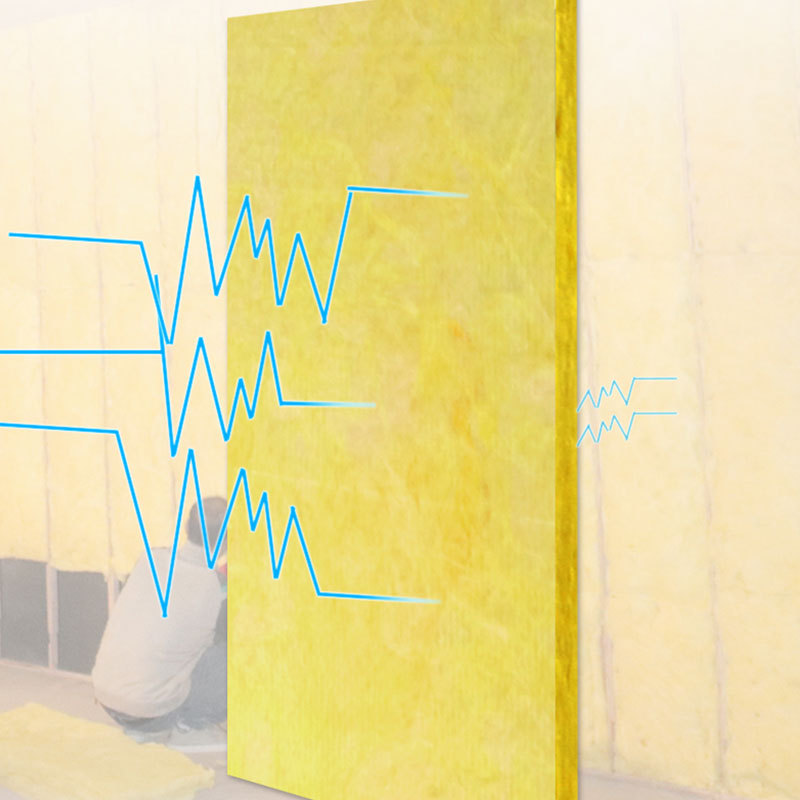
Glass wool sound-absorbing panels are made of glass fibers melted at high temperatures and have excellent audio absorption performance. This material usually appears in a lighter plate-like shape, with colors mostly yellow, white, or green, and its surface can be decorated with different treatments. The internal structure of glass wool consists of countless small pores, and this porosity is the key to its sound absorption effect. When hostile vibrations and sound waves occur, the sound waves will reflect and rub in this material, converting them into heat energy and reducing the return of reflected sound waves.
2、 The sound absorption principle of glass wool sound-absorbing board
The sound absorption principle of glass wool sound-absorbing panels is mainly based on the propagation characteristics of sound waves. Sound waves propagate in the air, and when they encounter glass wool sound-absorbing panels, most of them will attenuate through the pores of the panels. Specifically, this process can be divided into the following steps:
1. Sound waves enter: The sound waves first come into contact with the surface of the sound-absorbing panel, and some of the sound waves reflect off the material on the surface, but most of the sound waves will enter the interior of the material.
2. Attenuation of sound waves: After entering the material, sound waves reflect and diffuse within its tiny pores. This process converts sound energy into heat energy through the friction and vibration of sound waves in materials, resulting in a rapid decrease in the energy of sound waves.
3. Thermal energy dissipation: When the energy of sound waves is absorbed, it is ultimately dissipated in the form of heat, resulting in a significant reduction in the noise level in the room.
3、 Advantages and disadvantages of glass wool sound-absorbing panels
Advantage:
1. Excellent sound absorption performance: Glass wool sound-absorbing panels have good sound absorption effects in both high and medium frequency ranges, and can be widely used in various places such as music rooms, conference rooms, and cinemas.
2. Lightweight and easy to install: Compared with other sound-absorbing materials, glass wool sound-absorbing panels are relatively lightweight, easy to transport and install. This makes the construction process more convenient and avoids additional burden on the building structure.
3. Environmentally friendly materials: As a recyclable building material, glass wool has stable performance and does not contain harmful chemicals, making it safe and environmentally friendly.
4. Thermal insulation effect: Not only can it absorb sound, but glass wool also has good insulation performance, which helps to improve the comfort of indoor environment.
Disadvantages:
1. General moisture resistance: Glass wool is prone to moisture absorption, which may lead to a decrease in sound absorption effect in humid environments. Therefore, it is necessary to take moisture-proof measures during use.
2. Limited appearance: Although the surface of glass wool can be decorated to some extent, its appearance is generally not aesthetically pleasing and may not be suitable for certain high-end home or commercial environments.
3. Potential impact on health: During cutting and installation, the tiny fibers of glass wool may cause irritation to the skin and respiratory system, so protective equipment should be worn when performing related operations.
4、 Application fields of glass wool sound-absorbing panels
Glass wool sound-absorbing panels, as an effective acoustic material, are widely used in the following fields:
1. Home Interior: In a home environment, especially in a video room, game room, or studio, using glass wool sound-absorbing panels can effectively reduce audio reflection and improve sound quality.
2. Commercial space: In offices, conference rooms, restaurants, and other places, the acoustic environment affects communication and business atmosphere. Therefore, installing glass wool sound-absorbing panels can make the space quieter and improve work efficiency.
3. Industrial plants: In some noisy industrial places, using glass wool sound-absorbing panels can reduce the noise generated by equipment operation and improve the working environment for employees.
4. Cultural activity venues: Such as theaters, concert halls, etc., good acoustic effects are essential, and the application of glass wool sound-absorbing panels can effectively create good sound effects.
5、 Installation and maintenance precautions
When installing glass wool sound-absorbing panels, the following aspects should be noted:
1. Choose the appropriate thickness: Based on the size of the room and acoustic requirements, choose a glass wool sound-absorbing panel with the appropriate thickness to ensure the best sound-absorbing effect.
2. Reasonable layout: The layout of sound-absorbing panels should consider factors such as sound wave propagation paths and reflection points, and are usually installed in places with strong reflected sound waves such as walls and ceilings.
3. Moisture proof treatment: When used in humid areas, moisture-proof measures should be considered, such as setting up moisture-proof films or using sound-absorbing panels made of moisture-proof materials, to improve their durability.
4. Regular maintenance: Based on the usage environment, regularly check whether the sound-absorbing panel is damaged or dirty, and perform necessary cleaning and replacement.
6、 Summary
In summary, glass wool sound-absorbing panels, as an excellent soundproofing material, do indeed have good sound-absorbing performance through their unique structure. Reasonable application in appropriate places can significantly improve acoustic quality and create a more peaceful and comfortable environment for people. However, when considering the use of this material, it is necessary to take into account its advantages, disadvantages, and specific application scenarios to make the most suitable choice. If you want to improve the indoor acoustic environment, you may consider using glass wool sound-absorbing panels. Through scientific and reasonable design and installation, we believe that your space can be revitalized with new vitality and energy.

ISO9001, ISO14001, TUV, CE, etc, more than 40 national patents
10+ people teams offer differentdesign
1year warranty, free spare board and hardware for replace
Get in Touch
English